
Understanding the Process and Steps Involved in a Party Wall Dispute Crawley

A party wall dispute Crawley can be stressful and complex for both property owners involved. These disputes typically arise when building work is carried out on a shared wall or boundary and one or both owners are unhappy with the plans or procedures being followed. In this article, we’ll walk through the process and the steps involved in resolving a party wall dispute.
What is a Party Wall Dispute Crawley?
When building works are undertaken on or near a wall or a shared boundary without complying with the legal requirements. It usually leads to a party wall dispute. Including, but not limited to, failing to serve a party wall notice, failing to obtain the required written agreement from neighbours or failing to follow relevant legal steps set out in the Party Wall Act 1996.
What Are the Steps Involved in a Party Wall Dispute Crawley?
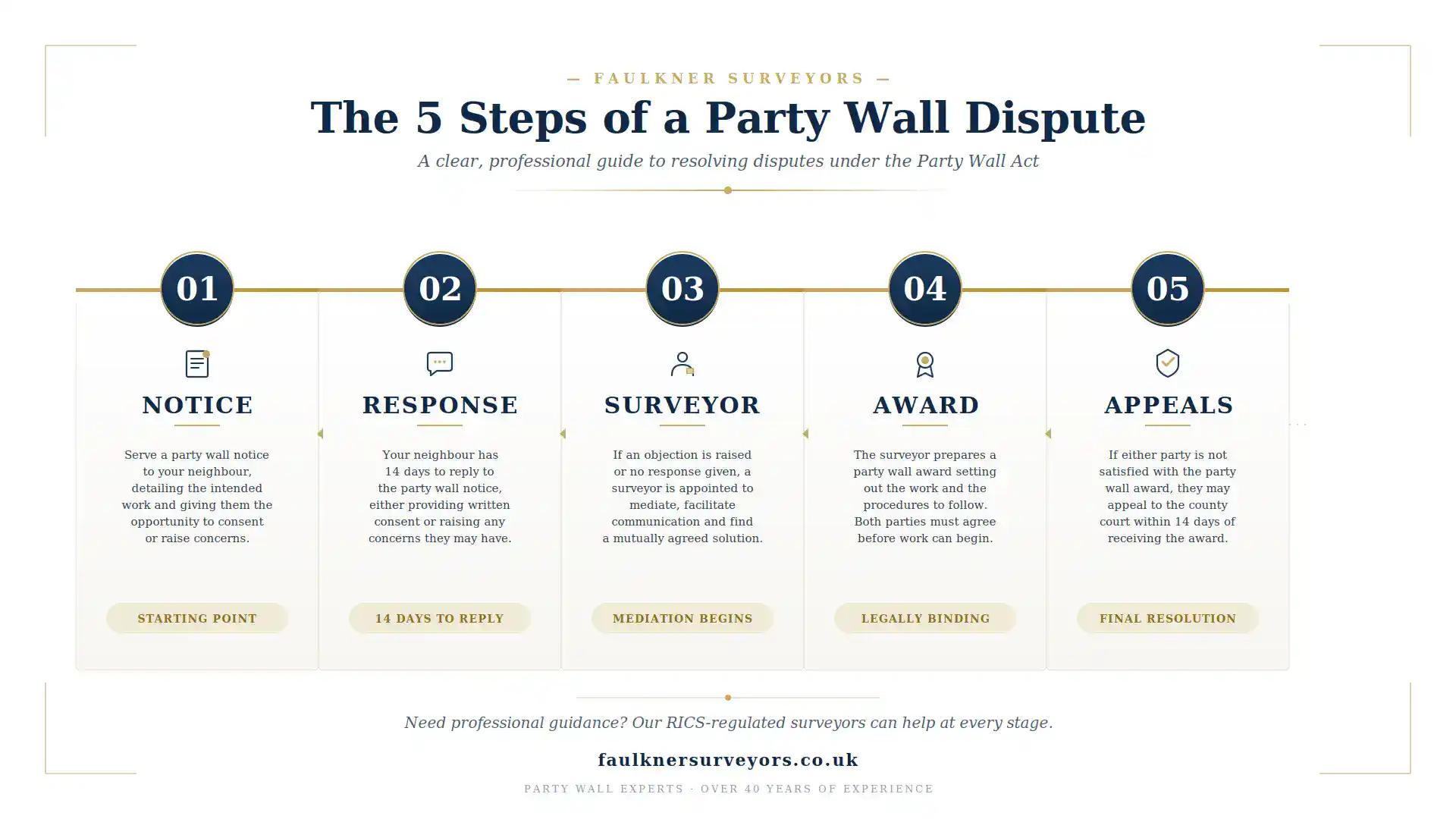
The steps involved in a party wall dispute can vary depending on the nature and severity of the dispute. However, some of the typical steps involved in a party wall dispute include:
- Notice – The first step in any party wall dispute is to serve a party wall notice to your neighbour, detailing the work you intend to carry out and giving them the opportunity to provide written consent or raise any concerns they may have.
- Response – Your neighbour then has 14 days to respond to the party wall notice and either provide written consent or raise any concerns they may have.
- Surveyor – If your neighbour objects to the work or fails to respond to the party wall notice, you may need to appoint a surveyor to mediate and help resolve the dispute. A surveyor can help facilitate communication and find a mutually agreeable solution.
- Award – If a surveyor is appointed, they will prepare a party wall award outlining the work to be carried out and the procedures to be followed. Both parties must agree to the terms of the award before work can begin.
- Appeals – If either party is not satisfied with the party wall award Crawley, they can appeal to the county court within 14 days of receiving the award.
Advantages of Consulting with a Party Wall Surveyor Crawley
Consulting with a party wall surveyor has several advantages, including:
- Expert Advice – A party wall surveyor provides expert advice on the legal requirements and potential solutions, ensuring that the work is carried out safely and efficiently.
- Preventing Disputes – A party wall surveyor can help prevent disputes with your neighbour by communicating and addressing any concerns they may have.
- Ensuring Compliance with Regulations – A party wall surveyor can help ensure that the work complies with relevant regulations, including the Party Wall Act 1996.
Conclusion Before You Escalate the Party Wall Disputes Crawley
In summary, a party wall dispute can be a complex and stressful process for the property owners involved. Understanding the process and steps involved is essential to resolving the dispute and preventing further legal issues. Contact Faulkner Surveyors for professional surveying services to ensure compliance with legal regulations and protect your property rights.
FAQs : Party Wall Disputes & How To Resolve Them
What counts as a “party wall dispute Crawley” under the Act?
This is worth clarifying because it catches people out. A party wall dispute does not usually mean a noisy argument over the fence. In the language of the Act, a dispute is deemed to have arisen the moment an adjoining owner either dissents to a notice or fails to respond within 14 days. It is a technical trigger that moves the matter into the formal surveyor process under section 10. Real disagreements certainly do happen too (over damage, hours of work, access, or scope), but strictly speaking the Act treats silence as dissent, so even a perfectly amicable neighbour who just forgets to reply is legally “in dispute” with you.
My neighbour has started work without serving notice. What can I actually do?
Move quickly, because your options narrow fast. The Act itself does not impose penalties for failing to serve a notice, and a recent Court of Appeal decision Crawley, Power & Kyson v Shah (2023), confirmed that if no notice is served, the dispute-resolution procedure under the Act is not triggered at all. That means you cannot simply appoint a surveyor and expect the Act to protect you. The realistic route is to write to your neighbour immediately, in writing, asking them to stop notifiable work and serve a valid notice. If they ignore you, the only effective remedy is applying to the county court for an interim injunction. Your neighbour still has a common-law duty of care, so if damage happens, you can pursue compensation through ordinary civil action, but the protections of the Act itself will not apply retrospectively.
If I dissent to my neighbour’s notice, can I stop their build altogether ?
Not really. The Party Wall etc. Act {name{ is designed to facilitate building work, not prevent it. You cannot refuse consent to stop an extension or loft conversion Crawley happening. What dissenting does is trigger the surveyor process, which produces a Party Wall Award setting out how the work is done: the hours builders can operate, whether scaffold can be placed over your garden, how damage will be recorded and put right, and so on. That protects your interests, but the work itself, provided it is lawful and properly planned, will go ahead. If someone promises they can help you block a neighbour’s scheme through the Act, be sceptical: that is not how the legislation works.
What happens if my neighbour ignores the notice entirely?
The process keeps moving without them. After 14 days of silence, your neighbour is deemed to have dissented and a dispute is in place. You then serve a further 10-day request asking them to appoint a surveyor. If they still do not respond, section 10(4) of the Act allows you, as the building owner, to appoint a surveyor on their behalf. Those two surveyors then proceed to draft the award, and your build can go ahead. The award is still binding on your neighbour even though they took no part in the process. This comes as a surprise to many homeowners, but it is a deliberate safety valve in the Act to stop builds being held hostage by an uncooperative neighbour.
How long do I actually have to challenge a Party Wall Award Crawley I’m unhappy with?
Not long, which is why paying attention when the award lands matters. Section 10(17) of the Act gives either party 14 days from the date the award is served to appeal to the county court. Miss that window and the award becomes final and binding, with no further route of challenge. Appeals are not cheap, and legal costs can run into several thousand pounds, so most homeowners get a second opinion from an experienced party wall surveyor before filing. The court can rescind the award, modify it, or uphold it. If your concern is a specific technical matter rather than the whole award, a referral to the third surveyor is often faster and cheaper than going to court.